
Dog Behavior
Scent Work for Dogs: The Ultimate Guide to Mental Stimulation and Physical Exercise

By Ashlie Adams, M.S. Psychology (Applied Behavior Analysis), DN-CET
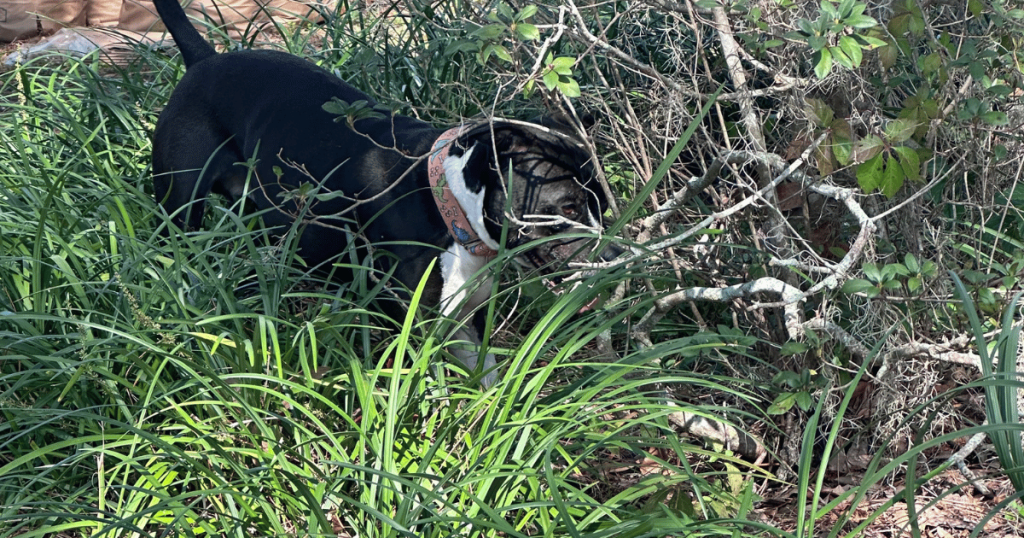
Does your dog need more mental and physical stimulation? The answer is almost always yes! Scent work for dogs is one of the most powerful enrichment activities you can provide—engaging their incredible sense of smell while offering both cognitive challenges and physical exercise. Whether you have a high-energy puppy or a senior dog, scent work activities can transform your dog’s daily routine and reduce unwanted behaviors.
What Is Scent Work for Dogs?
Scent work, also called nose work, is a dog sport and enrichment activity that taps into your dog’s natural hunting and tracking instincts. Dogs use their powerful sense of smell to:
- Locate hidden treats or toys
- Identify specific scents (essential oils, birch, anise, clove)
- Follow scent trails
- Search indoor and outdoor environments
Unlike competitive scent detection, recreational scent work can be done at home with minimal equipment, making it accessible for every dog owner.
The Science Behind a Dog’s Sense of Smell
Dogs possess up to 300 million olfactory receptors compared to humans’ mere 6 million. Their noses are extraordinary sensory organs capable of:
- Detecting scents at concentrations as low as parts per trillion
- Distinguishing individual scent components in complex mixtures
- Following scent trails that are days or even weeks old
- Detecting changes in human body chemistry (pregnancy, illness, blood sugar levels)
Real-World Example: Dogs Detecting Pregnancy
Over twenty years ago, one of my dogs started a new behavior—laying his head on my stomach. A couple of weeks later, I discovered I was pregnant. He continued this behavior throughout my entire pregnancy and stopped immediately after my son was born. Dogs can detect pregnancy hormones before home tests can even confirm it, showcasing their remarkable olfactory abilities.
The Scent Tapestry Analogy
Imagine the world of scents as an intricate tapestry. To humans, this tapestry appears as a blurry, distant painting—we recognize large shapes and colors, but fine details are lost. To dogs, this same tapestry comes alive in vivid, high-definition detail. They discern every thread, shade, and nuance with astounding clarity. What’s an undetectable whisper to us is a full aromatic symphony to them.
Mental Stimulation Benefits of Scent Work
Scent work provides exceptional mental enrichment that keeps dogs engaged, focused, and cognitively healthy. Here’s how:
1. Problem-Solving Skills Development
When dogs search for hidden scents, they engage in complex problem-solving:
- Analyzing environmental information
- Strategizing search patterns
- Making decisions based on scent evidence
- Adjusting tactics when initial approaches fail
This cognitive engagement is mentally exhausting in the best way—a tired brain leads to a calm, well-behaved dog.
2. Instinctual Satisfaction
Dogs are natural hunters and scavengers. Modern life rarely allows them to express these instincts, leading to:
- Destructive behaviors
- Excessive barking
- Anxiety and stress
- Prey drive issues
Scent work channels these instincts productively, satisfying deep biological needs in a controlled, positive manner. As I learned with my high-prey-drive dog, scent work transformed her problematic behaviors by giving her an appropriate outlet.
3. Critical Thinking and Decision-Making
Successful scent work requires dogs to:
- Analyze scent information in context
- Evaluate environmental factors (wind, temperature, surfaces)
- Make evidence-based decisions
- Learn from trial and error
This analytical process builds confidence and teaches dogs to think independently—valuable skills that transfer to everyday situations.
4. Reduces Boredom and Anxiety
Mental stimulation from scent work:
- Prevents destructive behaviors caused by boredom
- Reduces separation anxiety
- Provides calming, focused activity
- Builds confidence in fearful or anxious dogs
A 15-minute scent work session can tire your dog as much as a 30-minute walk!
Physical Exercise Benefits of Scent Work
While scent work emphasizes mental stimulation, it also provides excellent low-impact physical exercise:
Full-Body Workout
As dogs follow scent trails, they naturally:
- Climb over obstacles
- Bend and stretch to reach hidden scents
- Navigate varied terrain
- Engage core muscles for balance
Suitable for All Fitness Levels
Scent work is ideal for:
- Senior dogs with mobility limitations
- Puppies still developing physically
- Dogs recovering from injury (with vet approval)
- High-energy breeds needing mental outlets
- Brachycephalic breeds (bulldogs, pugs) that overheat easily with intense exercise
You can adjust difficulty and physical demands to match your dog’s abilities, making it truly inclusive.
Scent Work for All Breeds and Sizes
Every dog can participate in scent work, regardless of:
- Breed (sporting dogs, terriers, toy breeds, working dogs, mixed breeds)
- Size (Chihuahuas to Great Danes)
- Age (puppies to seniors)
- Behavioral challenges (anxiety, reactivity, prey drive)
Unlike some dog sports with breed-specific advantages, scent work celebrates each dog’s natural abilities. A Beagle isn’t necessarily better than a Poodle—success depends on training and motivation, not genetics.
Getting Started: Easy Scent Work Activities for Dogs
Beginner Scent Work Games
1. Find the Treat Game
- Hide treats around one room
- Start with easy locations (in plain sight)
- Gradually increase difficulty
- Use high-value treats your dog loves
2. Box Search
- Gather 3-5 cardboard boxes
- Hide treats in one box
- Let your dog search and indicate the correct box
- Increase to more boxes as skills improve
3. Scent Trail
- Drag a treat along the floor creating a trail
- Let your dog follow the trail to the reward
- Make trails longer and more complex over time
4. Muffin Tin Game
- Place treats in muffin tin cups
- Cover some cups with tennis balls
- Dog must use nose to find hidden treats
5. Towel Roll Search
- Roll treats inside a towel
- Let dog use nose and paws to unroll and find treats
- Great for rainy day indoor enrichment
Intermediate Scent Work Training
Essential Oil Scent Detection:
- Introduce specific scents (birch, anise, clove)
- Pair scent with high-value reward
- Hide scent in containers
- Dog learns to alert when finding target scent
Outdoor Scent Trails:
- Create longer trails in your yard
- Use varied terrain (grass, gravel, mulch)
- Add directional changes
- Practice in different weather conditions
Advanced Scent Work Challenges
- Vehicle searches (finding scent in/around car)
- Container searches (multiple boxes, bags, suitcases)
- Exterior building searches
- Buried scent detection
- Competitive scent work trials
Scent Work Equipment and Supplies
Basic Supplies (Under $20):
- High-value treats
- Cardboard boxes
- Old towels
- Tennis balls
- Muffin tin
Intermediate Equipment ($20-50):
- Essential oils (birch, anise, clove)
- Scent tins or containers
- Training pouches
- Clicker for marking correct behavior
Advanced Equipment ($50+):
- Professional scent work kits
- Hide containers
- Scent discrimination sets
- Training aids for competition
Common Scent Work Mistakes to Avoid
❌ Starting too difficult – Begin with easy successes to build confidence❌ Using low-value rewards – Use your dog’s absolute favorite treats❌ Rushing progression – Master each level before increasing difficulty❌ Training when dog is tired – Practice when dog is alert and motivated❌ Neglecting foundation skills – Build strong basics before advancing❌ Forgetting to celebrate – Enthusiastically reward every success
How Scent Work Reduces Problem Behaviors
Scent work addresses root causes of unwanted behaviors:
High Prey Drive
My dog’s constant prey drive led to problematic behaviors until we started scent work. By channeling her hunting instincts into structured activities, she became calmer and more focused.
Destructive Chewing
Bored dogs destroy furniture and belongings. Mental exhaustion from scent work eliminates boredom-driven destruction.
Excessive Barking
Dogs bark from frustration, boredom, or unmet needs. Regular scent work provides:
- Mental stimulation
- Instinctual satisfaction
- Productive energy outlet
Leash Reactivity
Building focus through scent work improves impulse control and attention, which transfers to better leash manners.
Scent Work vs. Other Dog Enrichment Activities
| Activity | Mental Stimulation | Physical Exercise | Indoor/Outdoor | All Ages Suitable |
|---|---|---|---|---|
| Scent Work | ⭐⭐⭐⭐⭐ | ⭐⭐⭐ | Both | Yes |
| Fetch | ⭐⭐ | ⭐⭐⭐⭐⭐ | Both | No (high impact) |
| Puzzle Toys | ⭐⭐⭐⭐ | ⭐ | Indoor | Yes |
| Agility | ⭐⭐⭐ | ⭐⭐⭐⭐⭐ | Outdoor | No (requires fitness) |
| Training | ⭐⭐⭐⭐ | ⭐⭐ | Both | Yes |
Scent work offers the best balance of mental and physical engagement for dogs of all abilities.
Creating a Scent Work Routine
Daily Scent Work Schedule:
Morning (5-10 minutes):
- Quick find-the-treat game before breakfast
- Builds positive start to the day
Midday (10-15 minutes):
- Box search or towel roll activity
- Breaks up the day for dogs home alone
Evening (15-20 minutes):
- More complex scent trails or outdoor searches
- Tires dog before bedtime
Weekly:
- Introduce new locations or challenges
- Practice in different environments
- Rotate between different scent work games
The Bond-Building Power of Scent Work
Scent work strengthens your relationship through:
- Teamwork – You and your dog work together toward a goal
- Communication – You learn to read your dog’s body language
- Trust – Your dog learns to rely on their instincts with your support
- Shared joy – Celebrating successes together builds connection
Unlike activities where you direct every move, scent work allows your dog to lead, building their confidence and your mutual respect.
Enrich Your Dog’s Life with Science-Based Activities
Ready to transform your dog’s daily routine with scent work and other enrichment activities? Canine Brain Games provides everything you need:
Bi-Monthly Enrichment Boxes Include:
- Puzzle toys for mental stimulation
- Treat-dispensing toys perfect for scent work
- Hands-on activities and training guides
- Customized for your dog’s play style (Chewer, Chaser, Cuddler, Forager)
Enrichment Barkive Digital Library:
- Over 100 expert resources on dog enrichment
- DIY scent work games and activities
- Step-by-step training tutorials
- Behavioral guidance from certified professionals
Join Canine Brain Games today and give your dog the mental stimulation they crave while reducing unwanted behaviors!
About the Author: Ashlie Adams holds a Master’s degree in Psychology with a focus in Applied Behavior Analysis and is a certified Canine Enrichment Technician (DN-CET). With certifications in Dog Emotion & Cognition and over 20 years of hands-on experience fostering behaviorally complex dogs, she specializes in science-based enrichment solutions that improve canine behavior and strengthen the human-dog bond.
300 million olfactory receptors” → Link to AKC article or scientific study
Suggested: https://www.akc.org/expert-advice/health/how-does-your-dog-smell/
Pingback: Canine Enrichment: Complete Guide for Dog Owners (2025)