
DIY Canine Enrichment, Dog Behavior, Enrichment Tips
Benefits of Enrichment Toys for Dogs: Prevent Behavioral Problems

By Ashlie Adams, M.S. Psychology, DN-CET
You’re a rockstar dog parent who wants the best for your dog and know that enrichment toys for dogs can make a difference. Making sure they have a rich and stimulating environment is key to their overall well-being and fulfillment. Your dog, just like you, needs mental and physical stimulation to stay happy and healthy. When your dog lacks mental and physical activity, you’ll start to see behavioral changes.
Unfortunately, these behavioral issues can be challenging for both you and your dog—but we’ve got you covered.
Understanding Why Enrichment Toys for Dogs are Important
Most of the dogs I’ve fostered over the years were listed as “Priority Dogs,” meaning they were considered unadoptable. They were amazing dogs, but they just couldn’t cope with their shelter environment or possibly things that had happened in the past.
These were dogs that were labeled as “no children” or “no other dogs.”
They were mouthy, reactive, and unable to calm themselves.
Most of these dogs, after living with me and having their enrichment needs met, went on to live successfully in homes with kids and other family pets.
Now, it’s always important to note that every dog is different! What works for one dog doesn’t necessarily work for another. This applies to using enrichment toys for dogs!
When to Seek Professional Help
Before we get into enrichment solutions, let’s talk about when you need extra support:
- Does your dog eat things they shouldn’t (pica disorder)?
- Are there certain items your dog resource guards?
- Does your dog struggle to be around other dogs or humans?
Always reach out to a certified behaviorist or trainer for these challenging behaviors.
One last note: don’t underestimate the benefits of practicing calm with your dog! But more on that in another blog post.
Let’s explore common behavioral problems caused by lack of enrichment, how to prevent them, the role of positive reinforcement, and how enrichment toys can transform your dog’s behavior.
6 Common Behavioral Issues Caused by Lack of Enrichment
1. Destructive Chewing
Cause: Boredom and excess energy
Symptoms: Chewing on furniture, shoes, or other household items
Prevention Strategies:
- Provide a variety of chew toys and rotate them every couple of weeks to keep your dog engaged
- Use positive reinforcement by rewarding your dog with treats or praise when they chew on appropriate toys
- When your dog is chewing something inappropriate, grab an approved chew and offer it for a swap
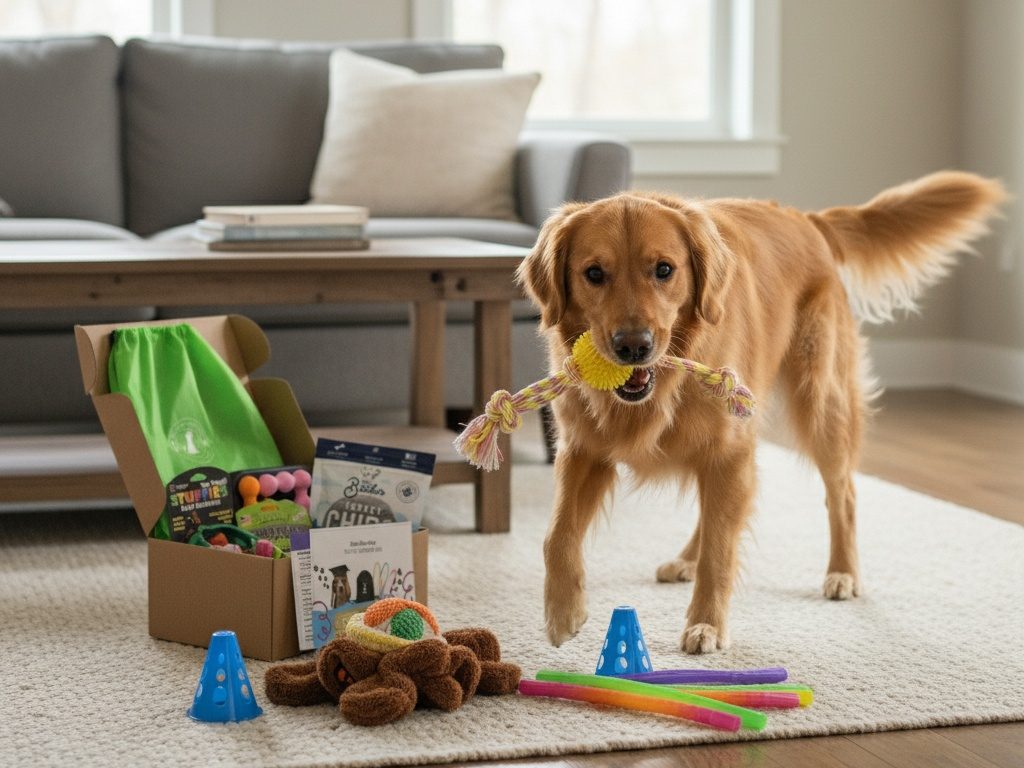
Canine Brain Games Solution: Our subscription box includes a selection of natural chew treats designed to keep your dog entertained and satisfy their chewing instincts safely.
2. Excessive Barking
Cause: Frustration, boredom, or attention-seeking
Symptoms: Persistent barking at everything or nothing in particular
Prevention Strategies:
- Regular exercise and interactive toys that challenge your dog mentally and physically
- Use positive reinforcement by rewarding quiet behavior
- Teach cues like “quiet” or “enough” using reward-based training
Canine Brain Games Solution: Each box contains engaging toys and activities that help alleviate boredom and reduce frustration, keeping your dog occupied and less likely to bark excessively.
3. Digging
Cause: Instinctual behavior, boredom, or escape attempts
Symptoms: Holes in the yard or garden
Prevention Strategies:
- Create a designated digging area and encourage your dog to use it
- Bury toys in the approved digging zone for your dog to discover
- Provide enrichment toys that mimic digging behavior indoors
- Reward your dog with treats and praise when they use the designated area
Canine Brain Games Solution: The subscription box includes items that encourage natural digging behaviors in a controlled and safe manner, such as digging toys or sandbox games.
4. Separation Anxiety
Cause: Lack of mental and physical stimulation when alone
Symptoms: Destructive behavior, excessive barking, or house soiling when left alone
Prevention Strategies:
- Enrichment activities like puzzle toys and treat-dispensing toys keep your dog occupied
- Use positive reinforcement by rewarding calm behavior before you leave and when you return
- Start with short departures and gradually increase duration
- Crate training provides your dog with a safe space (crates are never used for punishment)
Canine Brain Games Solution: Our boxes feature puzzle toys and treat dispensers that provide mental stimulation and keep your dog busy, helping to reduce anxiety when they’re alone.
5. Hyperactivity
Cause: Unspent energy and lack of mental stimulation
Symptoms: Inability to settle down, constant movement, over-excitement, mouthing during play or greetings
Prevention Strategies:
- Regular exercise routines combined with obedience training
- Sniff walks are a fantastic way to expend energy while providing mental stimulation
- Interactive play that channels energy positively
- Use positive reinforcement to reward calm behavior and focus during training
Canine Brain Games Solution: The subscription box includes toys and activities that channel your dog’s energy into productive play and learning, helping to manage hyperactivity effectively.
6. Obsessive-Compulsive Behaviors
Cause: Lack of mental stimulation and stress
Symptoms: Tail chasing, excessive licking, or repetitive behaviors
Prevention Strategies:
- Provide activities that challenge your dog’s mind: training sessions, scent work, new experiences
- Use positive reinforcement to reward healthy behaviors
- Redirect from obsessive actions with engaging alternatives
Canine Brain Games Solution: Our boxes contain a mix of scent work games, training aids, and mentally stimulating toys that help reduce stress and curb obsessive behaviors.
6 Effective Enrichment Activities for Dogs
1. Interactive Toys
Toys like KONGs, puzzle feeders, and treat-dispensing toys can keep your dog engaged for hours, providing both mental and physical stimulation. Reward your dog with treats and praise for solving puzzles and using interactive toys successfully.
Canine Brain Games Solution: Every subscription box is packed with a variety of interactive toys that challenge your dog’s mind and body.
2. Training Sessions
Short, regular training sessions help build a stronger bond with your dog while stimulating their mind. Teach new tricks or reinforce basic commands using positive reinforcement to encourage learning and cooperation.
Canine Brain Games Solution: The box includes training aids and tools that make training sessions fun and effective for both you and your dog.
3. Scent Work
Dogs have an incredible sense of smell—10,000 to 100,000 times more acute than ours! Hide treats around the house or yard and encourage your dog to find them. This activity satisfies their natural hunting instincts.
Use positive reinforcement by praising and rewarding your dog when they find the hidden treats. One of our favorite starter kits is the Nosey Nose Kit.
Canine Brain Games Solution: Our subscription includes scent work games that tap into your dog’s natural sniffing abilities and provide deep mental satisfaction.
4. Physical Exercise
Regular walks, runs, or play sessions in the yard are essential. Vary the routes and activities to keep things interesting for your dog. Reward your dog with treats and praise for good behavior during exercise.
Canine Brain Games Solution: Each box features items that promote physical activity, from fetch toys to agility challenges that get your dog moving.
5. Socialization
Arrange playdates with other dogs or visit dog parks. Social interaction is crucial for your dog’s mental health and helps prevent behavioral issues. Use positive reinforcement to reward friendly and appropriate social behavior.
Canine Brain Games Solution: Our subscription provides tools and toys that can be used during social play, enhancing your dog’s interactions with other dogs.
6. DIY Enrichment
Create homemade toys and games, like hiding treats in rolled-up towels or cardboard boxes. These activities are cost-effective and can be just as engaging as store-bought toys. Reward your dog with treats and praise for engaging in DIY enrichment activities.
Canine Brain Games Solution: Alongside our high-quality toys, we include ideas and materials for DIY enrichment activities that you can easily set up at home.
Making Enrichment Part of Your Daily Routine
Enrichment isn’t just a pastime—it should be part of your dog’s daily routine, broken up into play sessions throughout the day.
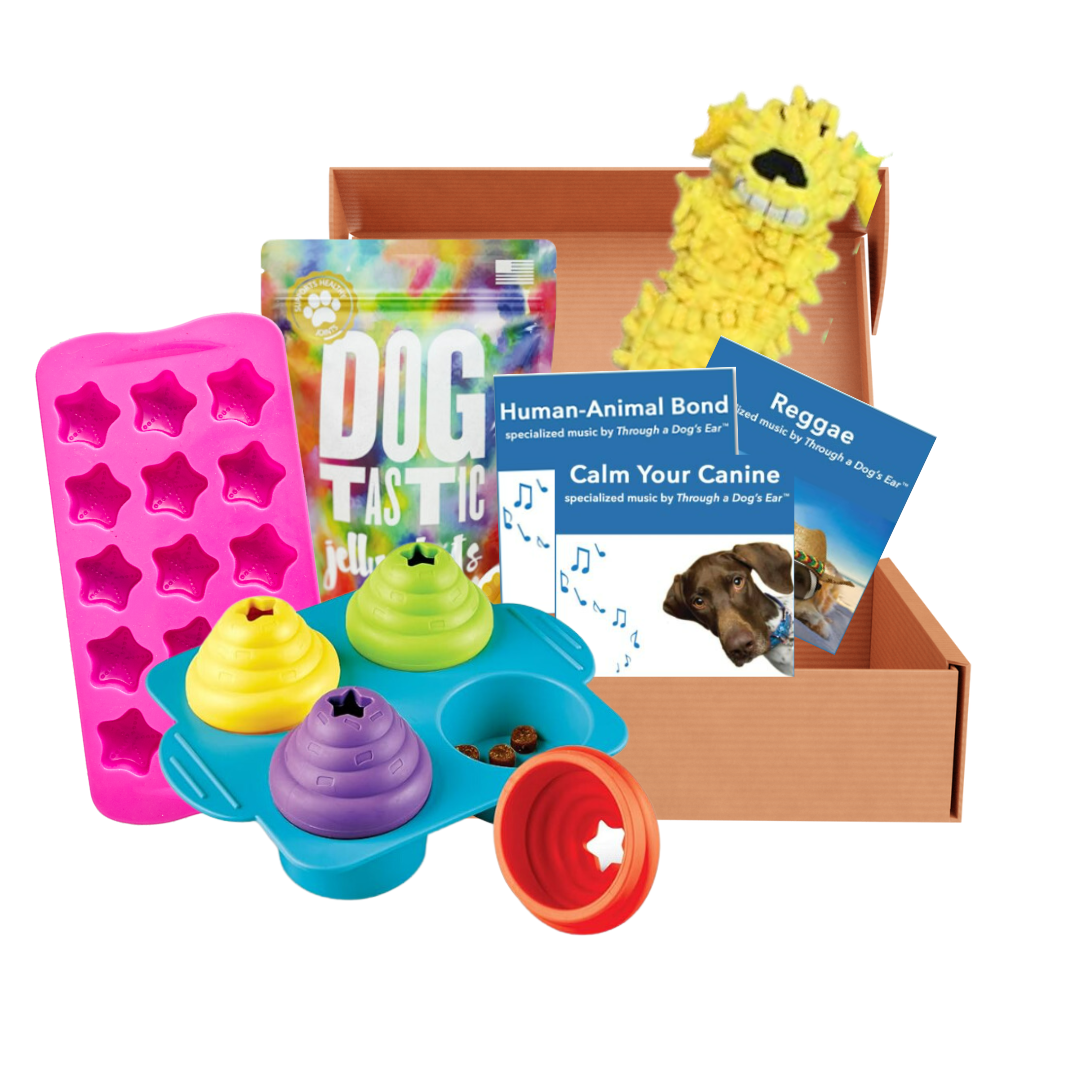
The Canine Brain Games subscription box is designed to help you provide consistent and varied enrichment for your dog. Each bi-monthly delivery brings you a curated selection of high-quality toys, puzzles, training aids, and more, all tailored to keep your dog engaged and thriving.
What’s Included in Every Box:
- Interactive puzzle toys
- Treat-dispensing toys
- Play style toys
- Scent work games
- Training aids
- Access to our Enrichment Barkive with expert guidance
Transform Your Dog’s Behavior with Enrichment Toys
Whether you’re dealing with destructive chewing, excessive barking, or separation anxiety, enrichment toys offer a science-based solution to common behavioral problems. By providing mental and physical stimulation through carefully selected toys and activities, you can help your dog become calmer, happier, and more well-adjusted.
Ready to give your dog the enrichment they deserve?
Visit caninebraingames.dog to start your subscription, or contact me directly at hello@caninebraingames.dog with any questions.
For more tips and ideas on canine enrichment, explore the Canine Brain Games blog. Let’s keep our furry friends entertained and thriving!
Ashlie Adams holds a Master’s in Psychology with a focus in Applied Behavior Analysis and is a certified Canine Enrichment Technician (DN-CET). With over 20 years of hands-on experience fostering behaviorally complex dogs, she understands how enrichment can transform even the most challenging behaviors.
What is canine enrichment and why is it important?
Canine enrichment involves providing activities and environments that stimulate a dog’s mind and body. It’s essential for preventing boredom, reducing stress, and mitigating behavioral issues such as destructive chewing, excessive barking, and separation anxiety. Enrichment toys keep dogs mentally engaged and physically satisfied.
How can I tell if my dog needs more enrichment?
Signs your dog needs more enrichment include destructive behaviors (chewing furniture or shoes), excessive barking, digging holes in the yard, hyperactivity, inability to settle down, and obsessive-compulsive behaviors like tail chasing or excessive licking. If your dog seems restless or engages in these activities, increasing enrichment can help.
What types of enrichment toys are best for preventing destructive chewing?
The best enrichment toys for preventing destructive chewing include durable chew toys, puzzle feeders, treat-dispensing toys like KONGs, and natural chews. Rotate toys every couple of weeks to maintain interest, and always reward your dog for chewing appropriate items instead of household objects.
Can enrichment toys help with separation anxiety in dogs?
Yes! Enrichment toys are highly effective for separation anxiety. Puzzle toys, treat dispensers, and interactive toys keep your dog mentally and physically engaged when alone. Start with short departures, use positive reinforcement, and provide engaging enrichment activities to help your dog feel more comfortable during your absence.
How often should I rotate my dog’s enrichment toys?
Rotate your dog’s enrichment toys every 1-2 weeks to maintain interest and prevent boredom. By introducing different toys periodically, you keep the play experience fresh and stimulating. This rotation strategy also helps you save money since toys feel “new” again when reintroduced.
Are enrichment toys suitable for all dog breeds and sizes?
Yes! Enrichment toys benefit dogs of all breeds, sizes, and ages. Choose toys appropriate for your dog’s size, chewing strength, and physical abilities. Puppies, adult dogs, and senior dogs all benefit from mental stimulation through enrichment activities tailored to their needs.
What should I do if my dog shows signs of resource guarding with enrichment toys?
If your dog exhibits resource-guarding behaviors with toys or treats, avoid taking items directly from your dog. Instead, use trade-offs with high-value treats and teach a “drop it” command using positive reinforcement. Consult with a professional dog behaviorist or certified trainer for personalized guidance on resource guarding.
How long should enrichment play sessions last?
Enrichment sessions should be broken up throughout the day rather than one long session. Aim for 10-15 minute sessions, 3-4 times daily. This prevents mental fatigue while providing consistent stimulation. Adjust duration based on your dog’s age, energy level, and attention span.
Can enrichment toys help with my dog’s hyperactivity?
Absolutely! Enrichment toys channel your dog’s excess energy into productive play and learning. Combine interactive toys with regular exercise, sniff walks, and training sessions to help manage hyperactive behaviors. Mental stimulation through enrichment can be just as tiring as physical exercise.
What’s the difference between physical exercise and mental enrichment for dogs?
Physical exercise involves activities like walks, runs, and fetch that tire your dog’s body. Mental enrichment involves puzzle toys, scent work, and training that tire your dog’s mind. Both are essential for a well-balanced dog. In fact, 15 minutes of mental enrichment can be as tiring as a 30-minute walk!
Pingback: 7 DIY Dog Puzzle Toys: Easy Homemade Enrichment Ideas
Pingback: 8 Science-Based Brain Games For Dogs | Mental Enrichment