

DIY Canine Enrichment, Enrichment Tips
8 Science-Based Brain Games for Dogs: Expert Enrichment Activities

Written by Ashlie Adams, M.S. Psychology (Applied Behavior Analysis), DN-CET
As dog guardians, we want more than just happy dogs—we want them to live fulfilling lives that honor their natural instincts and cognitive abilities. Too often, we expect dogs to adapt to our human world without recognizing what they truly need to thrive.
The truth is: mental enrichment is just as important as physical exercise for your dog’s wellbeing.
Learning how to provide brain games for dogs is one of the most impactful ways to reduce anxiety, prevent boredom, and strengthen your bond. This science-based guide will show you exactly how to engage your dog’s mind using expert-designed enrichment activities.
Why Brain Games Matter: Understanding the Canine Mind
Before we dive into specific dog enrichment activities, let’s explore why mental stimulation is critical for your dog’s quality of life.
The Science Behind Canine Cognition
Dogs are incredibly intelligent creatures with complex cognitive abilities. Research shows that:
- Dogs have 100-300 million odor receptors (compared to our 6 million), making scent work their most powerful mental exercise
- Mental stimulation reduces cortisol levels (stress hormone) and promotes calm behavior
- Cognitive enrichment prevents boredom-related behaviors like excessive barking, destructive chewing, and anxiety
- Problem-solving activities strengthen the dog-human bond through positive interaction
As a Certified Canine Enrichment Technician, I’ve seen firsthand how brain games transform dogs—especially behaviorally complex and rescue dogs who need structured mental outlets.
What Dogs Really Need
Dogs thrive when they have:
- Mental stimulation through problem-solving activities
- A “job” or purpose that engages their natural instincts
- Sensory enrichment that honors their powerful sense of smell
- Connection with their environment through exploration and discovery
Now let’s explore eight science-backed brain games that deliver all of these benefits.
1. Puzzle Toys: Problem-Solving for Treats
Difficulty Level: Beginner to AdvancedPrimary Benefit: Cognitive development, impulse control
Puzzle toys are one of the most popular dog brain training tools—and for good reason. These interactive toys require your dog to manipulate pieces, slide compartments, or flip levers to access hidden treats.
How to Introduce Puzzle Toys:
- Start simple: Choose beginner-level puzzles with obvious treat compartments
- Demonstrate first: Show your dog how the puzzle works
- Praise effort, not just success: Reward your dog for trying, even if they don’t solve it immediately
- Gradually increase difficulty: As your dog masters one level, introduce more complex puzzles
Pro Tip: Rotate puzzle toys every few days to maintain novelty and prevent boredom.
Best For:
- Dogs who are food-motivated
- High-energy breeds that need mental outlets
- Rainy days when outdoor exercise is limited
2. Scent Work: Hide and Seek with Treats
Difficulty Level: All levelsPrimary Benefit: Engages natural foraging instincts, reduces anxiety
Transform the classic hide-and-seek game into a powerful dog enrichment activity that taps into your dog’s most dominant sense: smell.
How to Play:
For Beginners:
- Let your dog watch you hide a high-value treat in an easy location
- Release them with a cue like “Find it!”
- Celebrate enthusiastically when they discover the treat
For Advanced Dogs:
- Hide treats in multiple locations while your dog waits in another room
- Use various heights and hiding spots (under towels, inside boxes, behind furniture)
- Gradually increase difficulty by using less aromatic treats
Science Behind It: Scent work activates your dog’s natural foraging behavior and provides deep mental satisfaction. Studies show that 15 minutes of scent work can be as tiring as a 30-minute walk.
Best For:
- Fearful or anxious dogs (builds confidence)
- Senior dogs with mobility limitations
- All breeds and ages
3. DIY Brain Teasers: Household Item Enrichment
Difficulty Level: Beginner to IntermediatePrimary Benefit: Cost-effective mental stimulation, creativity
You don’t need expensive toys to provide quality brain games for dogs. Household items can create engaging enrichment activities.
Easy DIY Ideas:
Muffin Tin Puzzle:
- Place treats in muffin tin cups
- Cover each cup with a tennis ball
- Let your dog figure out how to remove the balls
Towel Roll Game:
- Lay a towel flat and place treats along one edge
- Roll the towel up tightly
- Let your dog unroll it to find the treats
Cardboard Box Treasure Hunt:
- Place treats inside various sized boxes
- Nest boxes inside each other
- Let your dog tear and explore (supervise to prevent ingestion)
Paper Towel Tube Puzzle:
- Fold ends of paper towel tube to trap treats inside
- Let your dog figure out how to open it
Pro Tip: Always supervise DIY enrichment activities and remove any pieces your dog might swallow.
4. Interactive Feeding: Slow Feeders & Scatter Feeding
Difficulty Level: BeginnerPrimary Benefit: Slows eating, engages foraging instincts, reduces bloat risk
Mealtime shouldn’t be a 30-second race. Transform feeding time into a cognitive activity with these dog brain training techniques.
Scatter Feeding Method:
- Choose appropriate surface: Start with a clean floor, yoga mat, or snuffle mat
- Scatter kibble or freeze-dried food across the area
- Let your dog forage for each piece using their nose
- Benefits: Slows eating pace, engages natural foraging behavior, provides mental stimulation
Interactive Feeder Options:
- Slow feeder bowls with maze-like ridges
- Snuffle mats that mimic foraging in grass
- Lick mats spread with wet food or purées
- Puzzle feeders that require manipulation
Research shows: Dogs who work for their food show increased satisfaction and reduced anxiety compared to dogs fed from traditional bowls.
5. Name That Toy: Vocabulary Building Game
Difficulty Level: Intermediate to AdvancedPrimary Benefit: Language comprehension, memory development, bonding
This impressive dog enrichment activity showcases your dog’s cognitive abilities while strengthening your communication.
Training Steps:
Phase 1: Single Toy Focus
- Choose one favorite toy and assign a specific name (e.g., “Ball,” “Rope,” “Squeaky”)
- Say the toy’s name while playing with it
- Repeat 10-15 times per session over several days
Phase 2: Discrimination Training
- Place the named toy next to a different toy
- Ask your dog to “Get [toy name]”
- Reward heavily when they choose correctly
- If they choose wrong, redirect without punishment
Phase 3: Expanding Vocabulary
- Once your dog reliably identifies 2-3 toys, add more
- Some dogs can learn 10+ toy names
- Practice regularly to maintain the skill
Famous Example: A Border Collie named Chaser learned over 1,000 object names, proving dogs’ remarkable language comprehension abilities.
6. Indoor Agility: Obstacle Course Brain Training
Difficulty Level: IntermediatePrimary Benefit: Physical + mental exercise, coordination, confidence building
Agility isn’t just physical—it’s one of the best brain games for dogs because it requires planning, problem-solving, and body awareness.
DIY Indoor Agility Course:
Equipment (household items):
- Broomstick between chairs (jump)
- Blanket over chairs (tunnel)
- Pillows in a line (weaving poles)
- Cardboard boxes (platforms to jump on/off)
- Hula hoop (jump through)
How to Train:
- Introduce one obstacle at a time using treats and encouragement
- Use a lure to guide your dog through/over/around obstacles
- Add a verbal cue for each obstacle (e.g., “Jump,” “Through,” “Weave”)
- Chain obstacles together once your dog understands each one
- Practice 5-10 minutes per session to prevent frustration
Cognitive Benefits: Your dog must remember the sequence, plan their movements, and respond to your cues—providing comprehensive mental stimulation.
7. The Cup Game: Memory & Problem-Solving
Difficulty Level: IntermediatePrimary Benefit: Memory development, impulse control, focus
This classic shell game is an excellent dog brain training exercise that challenges memory and concentration.
How to Play:
Beginner Version:
- Use 2 opaque cups
- Let your dog watch you place a treat under one cup
- Slowly move the cups slightly apart
- Ask “Which one?” and let them indicate their choice
- Reward correct choices enthusiastically
Advanced Version:
- Use 3 cups
- Shuffle cups more quickly
- Add more complex movements
- Increase distance between cups
Training Tip: If your dog gets frustrated, make it easier. Success builds confidence and keeps the game fun.
Cognitive Skills Developed:
- Visual tracking
- Short-term memory
- Impulse control (waiting for your cue)
- Problem-solving
8. Trick Training: Mental Workout Through Learning
Difficulty Level: All levelsPrimary Benefit: Bonding, mental exhaustion, confidence, communication
Teaching new tricks is one of the most effective dog enrichment activities because it combines mental stimulation with positive reinforcement training.
Beginner Tricks:
- Touch (nose to hand)
- Spin
- Paw/shake
- Take a bow
Intermediate Tricks:
- Roll over
- Play dead
- Weave through legs
- Back up
Advanced Tricks:
- Put toys away
- Close doors
- Bring specific items by name
- Multi-step sequences
Why Trick Training Works: Learning new behaviors creates new neural pathways, keeping your dog’s brain young and engaged. Just 10-15 minutes of training can tire a dog as much as a long walk.
Creating Your Dog’s Enrichment Routine
Now that you know these eight brain games for dogs, here’s how to implement them effectively:
Daily Enrichment Schedule:
Morning (10-15 minutes):
- Scatter feeding breakfast OR
- Quick scent work session
Midday (5-10 minutes):
- Puzzle toy OR
- DIY brain teaser
Evening (15-20 minutes):
- Trick training OR
- Indoor agility course OR
- Cup game
Weekly Rotation: Rotate activities to maintain novelty and prevent boredom. Dogs thrive on variety within routine.
Signs Your Dog Needs More Mental Stimulation:
- Excessive barking or whining
- Destructive chewing
- Hyperactivity or inability to settle
- Attention-seeking behaviors
- Anxiety or stress signals
- Obsessive behaviors (tail chasing, shadow chasing)
The Science-Based Approach to Dog Enrichment
As someone with a Master’s degree in Psychology focusing on Applied Behavior Analysis and certification as a Canine Enrichment Technician, I’ve worked with hundreds of dogs—from puppies to seniors, from easy-going to behaviorally complex.
Here’s what I’ve learned: Dogs don’t need expensive equipment or hours of your time. They need:
✓ Consistent mental stimulation (even 10 minutes daily makes a difference)✓ Activities that honor their natural instincts (especially scent work)✓ Positive reinforcement that builds confidence✓ Variety to prevent boredom✓ Your engagement and presence during activities
The Transformation I’ve Witnessed:
Dogs who receive regular cognitive enrichment show:
- Reduced anxiety and stress behaviors
- Improved focus and impulse control
- Decreased destructive behaviors
- Stronger bonds with their guardians
- Better overall wellbeing and happiness
Take Your Dog’s Enrichment to the Next Level
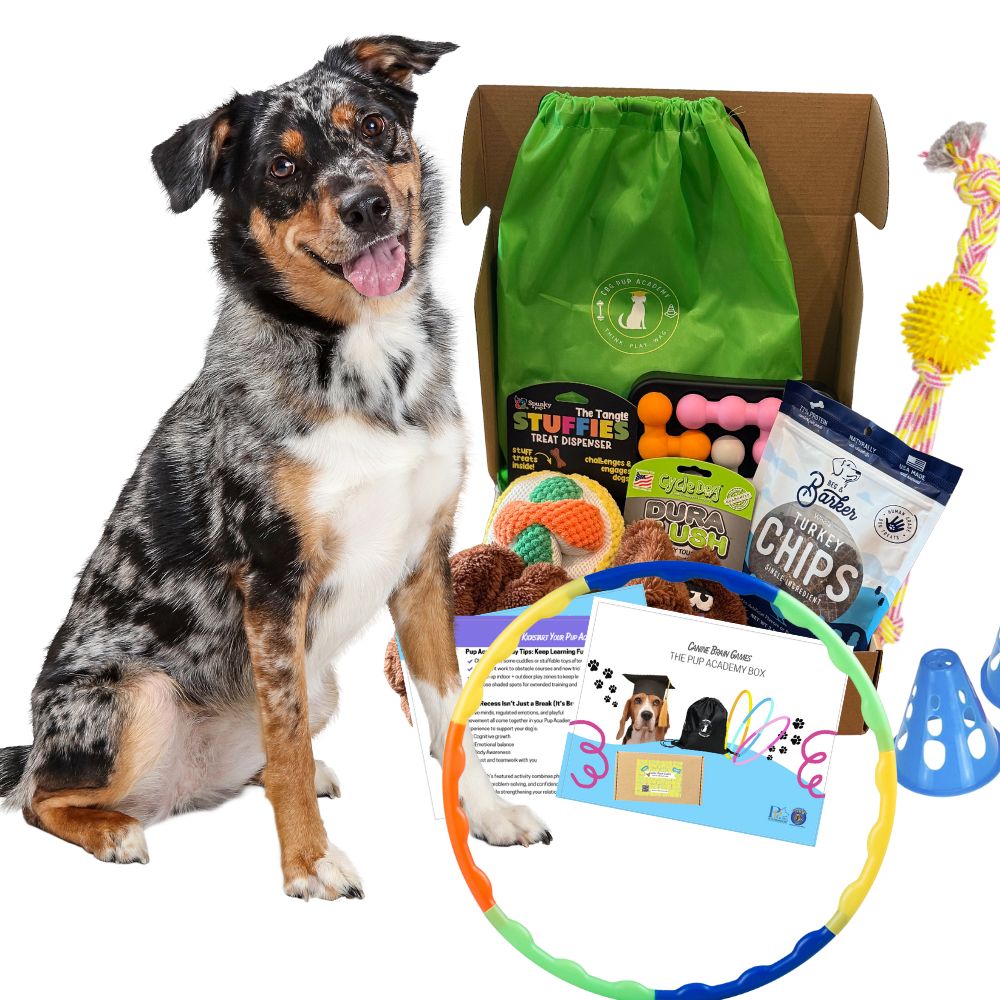
Implementing these brain games for dogs is a fantastic start, but consistency is key. That’s why I created Canine Brain Games—to make science-based enrichment simple and accessible for every dog guardian.
What’s Inside Our Bi-Monthly Enrichment Boxes:
Each box is expertly designed and includes:
✓ Puzzle toys tailored to your dog’s play style✓ Treat-dispensing toys for problem-solving fun✓ Hands-on activities like trick training guides and DIY games✓ Access to our Enrichment Barkive with 100+ expert resources
Customized for Four Play Styles:
- Chaser (loves movement and fetch)
- Forager (scent-driven and food-motivated)
- Chewer (enjoys texture and destruction)
- Cuddler (prefers gentle, close-contact activities)
Every box ships every two months with fresh activities to keep your dog engaged and mentally stimulated.
[Explore Our Subscription Boxes →]Free Resource: Join Our Enrichment Community
Want more expert tips, DIY games, and science-based training guides?
Get instant access to our Enrichment Barkive when you subscribe, featuring:
- Step-by-step trick training tutorials
- Behavioral problem-solving guides
- DIY enrichment game instructions
- Expert Q&A sessions
- Community support from fellow dog guardians
Final Thoughts: A Happier, Smarter Canine Companion
The key to a happy, healthy, and well-behaved dog lies in meeting their cognitive needs. By incorporating these dog enrichment activities into your routine, you’re not just preventing boredom—you’re honoring what makes dogs truly remarkable.
Remember:
- Start with your dog’s current skill level
- Celebrate effort, not just success
- Keep sessions short and positive
- Rotate activities for variety
- Most importantly: have fun together
Mental stimulation reduces anxiety, prevents destructive behaviors, and strengthens your bond. These brain games for dogs aren’t just activities—they’re investments in your dog’s quality of life.
So let the games begin, and watch as your dog’s intelligence, confidence, and joy shine through in delightful ways.
About the Author:
Ashlie Adams holds a Master’s degree in Psychology with a focus in Applied Behavior Analysis and is a Certified Canine Enrichment Technician (DN-CET) with certifications in Dog Emotion & Cognition. With over 20 years of hands-on experience and having fostered more than 30 behaviorally complex dogs, she founded Canine Brain Games to make science-based enrichment accessible to every dog guardian.
FAQ: Brain Games for Dogs
How long should I play brain games with my dog each day?
Start with 10-15 minutes daily and adjust based on your dog’s engagement. Mental stimulation can be more tiring than physical exercise, so watch for signs of mental fatigue (yawning, looking away, lying down). Multiple short sessions throughout the day are more effective than one long session.
Can senior dogs benefit from brain games?
Absolutely! Cognitive enrichment is especially important for senior dogs to maintain mental sharpness and prevent cognitive decline. Choose low-impact activities like scent work, puzzle toys, and the cup game that don’t require physical exertion.
My dog gets frustrated with puzzle toys. What should I do?
Start with easier puzzles and heavily reward any effort, not just success. If your dog shows frustration (whining, pawing aggressively, walking away), the puzzle is too difficult. Make it easier by showing them how it works or leaving compartments partially open. Success builds confidence.
Are brain games suitable for puppies?
Yes! Puppies have developing brains that benefit enormously from cognitive stimulation. Start with simple activities like scatter feeding, basic scent work, and beginner puzzle toys. Keep sessions very short (5 minutes) as puppies have limited attention spans.
How do I know if my dog needs more mental stimulation?
Common signs include: excessive barking, destructive chewing, hyperactivity, inability to settle, attention-seeking behaviors, and anxiety. If your dog seems restless despite physical exercise, they likely need more mental enrichment.
Can brain games replace physical exercise?
No, but they complement it. Dogs need both physical and mental exercise. A 15-minute brain game session can tire a dog similarly to a 30-minute walk, but both types of stimulation are important for overall wellbeing.
What if my dog isn’t food-motivated for treat-based games?
Use whatever motivates your dog—favorite toys, play sessions, or praise. For scent work and puzzle games, you can hide toys instead of treats. Some dogs are more motivated by play than food, and that’s perfectly fine.
Ready to transform your dog’s daily routine with expert-designed enrichment?
[Get Your First Box →]