The Close Position
Category: Training Foundation • Loose Lead Walking • Level: All Dogs • Time: 3–5 minutes per session
Category: Training Foundation • Loose Lead Walking • Level: All Dogs • Time: 3–5 minutes per session
Jump to: Why It Works • What You Need • How to Teach It • Building Reliability • Pro Tip • Troubleshooting • What’s Next
The Close Position is your dog standing or walking parallel to your left leg, their shoulder roughly in line with yours, on a relaxed leash. Not a formal heel. Not parade-ground precision. Just: alongside you, facing the same direction, leash slack.
This is the position that makes loose lead walking possible. Every step in the 10 Steps module starts from or returns to Close. It’s where you build from, where your dog returns when they’re unsure, and where the walk actually happens. Get this solid before moving to any of the 10 Steps.
Most loose lead walking problems start because the dog doesn’t have a rewarding default position. They drift, forge ahead, or pull — not because they’re being difficult, but because nobody clearly showed them where the good stuff happens.
The Close Position game fixes that by making one specific spot — alongside your left leg, shoulder to shoulder — consistently the most rewarding place to be. Every time your dog lands there and gets marked and rewarded, you’re building a magnet. Over time that spot becomes where they want to be, not because you’re correcting them elsewhere, but because Close consistently pays off.
The goal isn’t obedience. It’s that your dog discovers: being in this spot, next to your left leg, is the best place in the world.
Use Train-Test-Train throughout: do 5 repetitions, then assess. 4–5 correct → Push to the next criterion. 3 correct → Stick and repeat. 1–2 correct → Drop back and make it easier.


Build Consistency: Repeat the entire sequence 5 times in a row to help your dog build muscle memory.
Train-Test-Train: * Train: Guide them with the lure.
Test: See if they will move into position with just your hand movement (no treat in hand).
Train: Reward heavily when they get it right!
Pro Tip: Keep your sessions short, fun, and highly rewarding. Always end on a success!


Reward straight down your left side, every time. This is the single most important mechanical detail in teaching Close. A treat delivered across your body teaches your dog to swing in front of you, which is exactly what you don’t want.
Once Close is solid in a calm environment, build it out gradually:
The golden rule: never add a new D without first confirming the behavior is solid at the current level. If your dog is failing more than succeeding, back up one step.
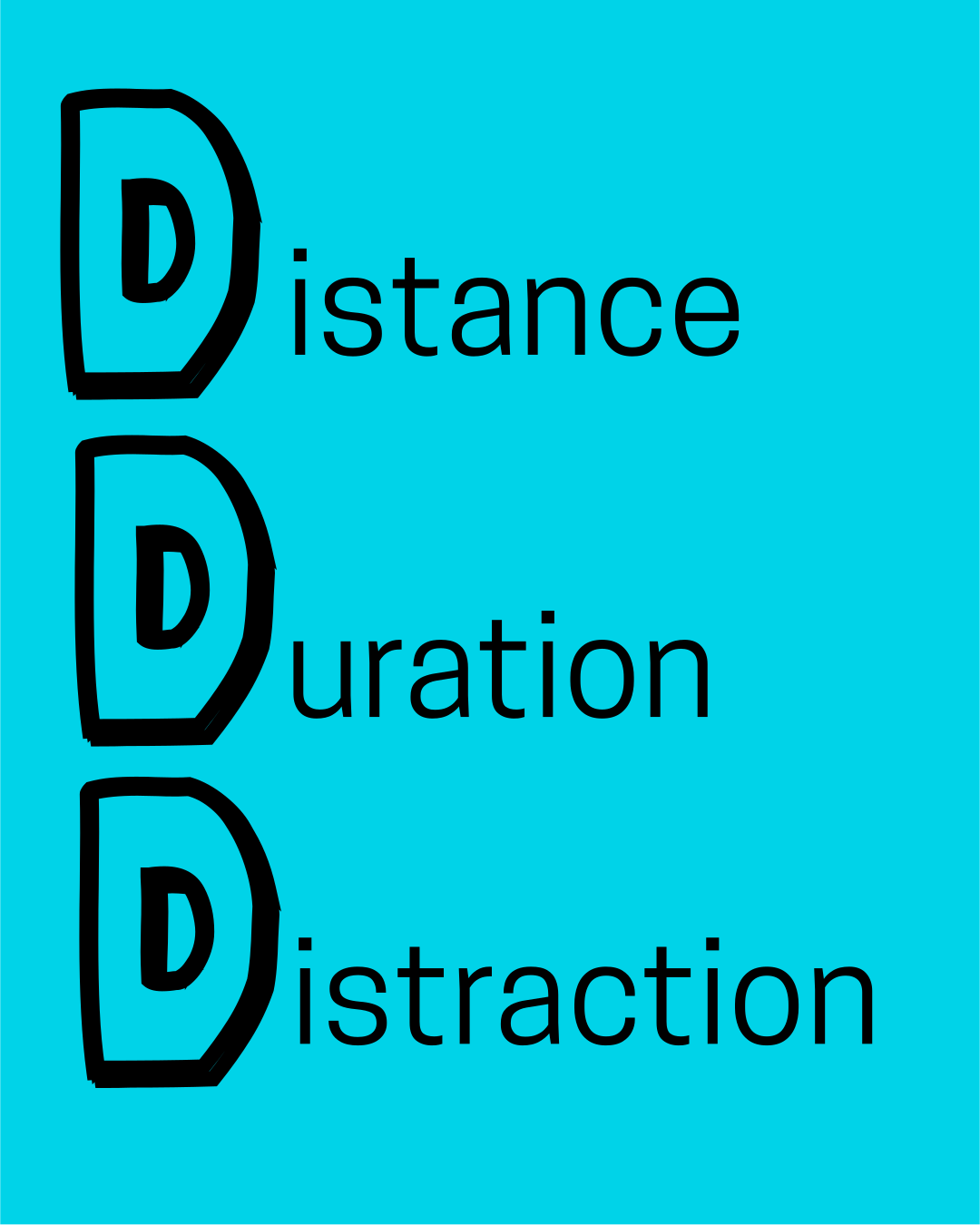
Once your dog reliably moves into Close following your empty hand signal:
Practice stepping into Close position yourself — rather than luring your dog — when they’re nearby. Stand next to them, mark, and reward. This teaches them that moving into that spot is rewarding even when you didn’t ask for it. That automatic orientation is what eventually becomes automatic loose lead walking.
My dog keeps swinging in front of me instead of staying parallel.
You’re delivering the treat too far forward. Drop it further back along your left leg — even as far back as your hip or thigh. This pulls your dog’s nose behind rather than ahead, which naturally straightens their position.
My dog knows Close at home but forgets it on walks.
This is a generalization issue, not a training failure. Go back to Criterion 1 with the lure in each new environment before adding forward movement. The behavior needs to be rebuilt at each new location before it’s reliable there.
My dog won’t follow the lure into position.
Increase treat value or move to a quieter space. Sometimes a dog is simply too stimulated to follow a lure — that’s information about the environment, not the dog. Back up a step.
My dog keeps sitting rather than standing in Close.
A sit in Close is fine — mark and reward it. As you begin adding forward movement in the 10 Steps, standing will become natural because walking requires it. Don’t try to fix the sit now; it will resolve itself once you’re moving.
All three prerequisites are now in place: