Eyes on Me
Focus • Level: All Dogs (beginner modifications included) • Time: 3–5 minutes per session
Focus • Level: All Dogs (beginner modifications included) • Time: 3–5 minutes per session
JUMP TO:
Why It Works • What You Need • How to Teach It • Building Reliability • Pro Tip • Special Section • What’s Next
Here’s a question worth sitting with: when was the last time your dog looked at you on purpose — not because you had food, not because you called their name, but because checking in with you felt like the right thing to do?
That’s what Eyes on Me teaches. Not a stare, not an obedience command, not a trick. Just a dog who’s learned that looking at their person pays off — and who starts doing it automatically, even around distractions.
It’s one of the most foundational skills in this whole library. And it starts with something as simple as a treat held to the side.
Dogs are incredibly focused animals — just not always on us. Watch a dog locked onto a squirrel, a scent trail, or another dog across the street and you’ll see exactly how focused they can be when something matters to them.
That focus is real, it’s powerful, and it’s already there. What Eyes on Me teaches isn’t focus itself — it’s that focusing on you is the best thing in the world. That’s a learned association, and it’s one we build on purpose.
Eyes on Me uses a principle called “choice-based learning” — instead of asking your dog to look at you, you set up a situation where looking at you is the most logical, most rewarding choice they can make.
No pressure, no command, no leash cue. Just your dog figuring out that eye contact works.
This is also one of the best pre-walk, pre-greeting, and pre-distraction tools you have. A dog who can orient to you in a calm environment is building the same skill they’ll eventually use when a squirrel runs across the path.
Phase 1 — The Setup
Start in a quiet, low-distraction space. You want to be the most interesting thing in the room right now.
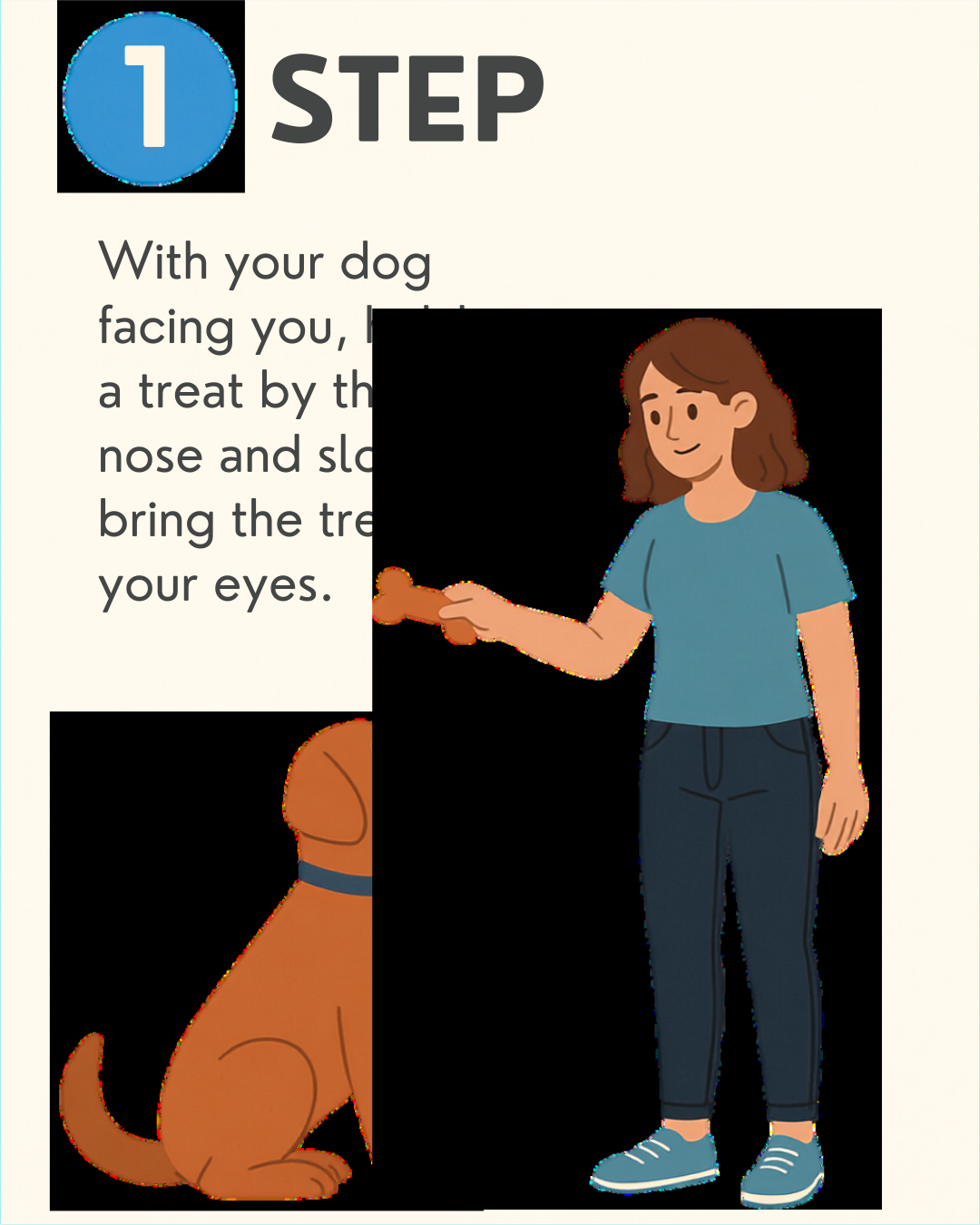
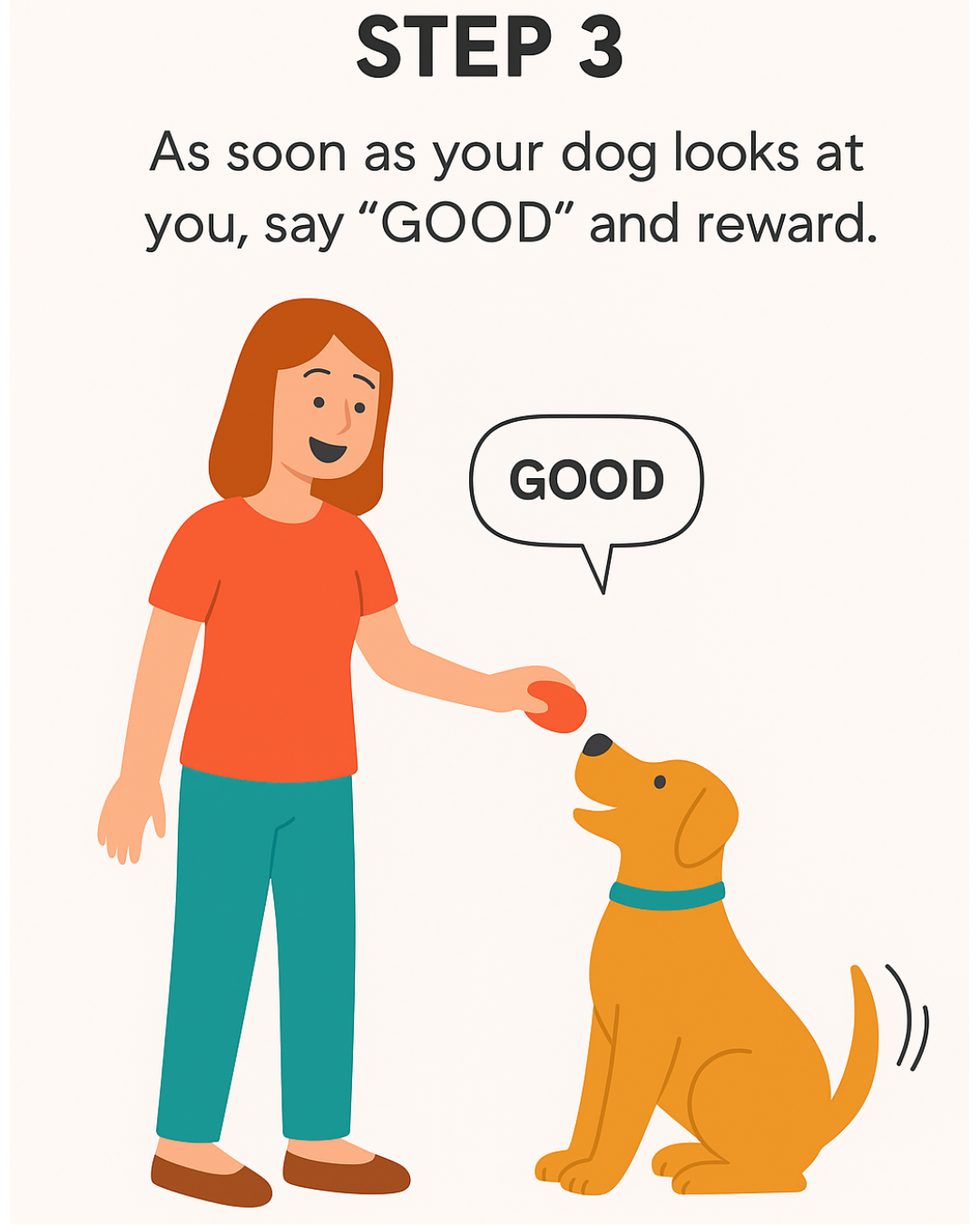
Timing is everything here. The marker (“Yes!” or click) needs to happen the moment their eyes meet yours, not a second later.
Phase 2 — Adding the Cue
Once your dog is reliably offering eye contact (they look at you consistently, within a few seconds, across several sessions), you can add the verbal cue.
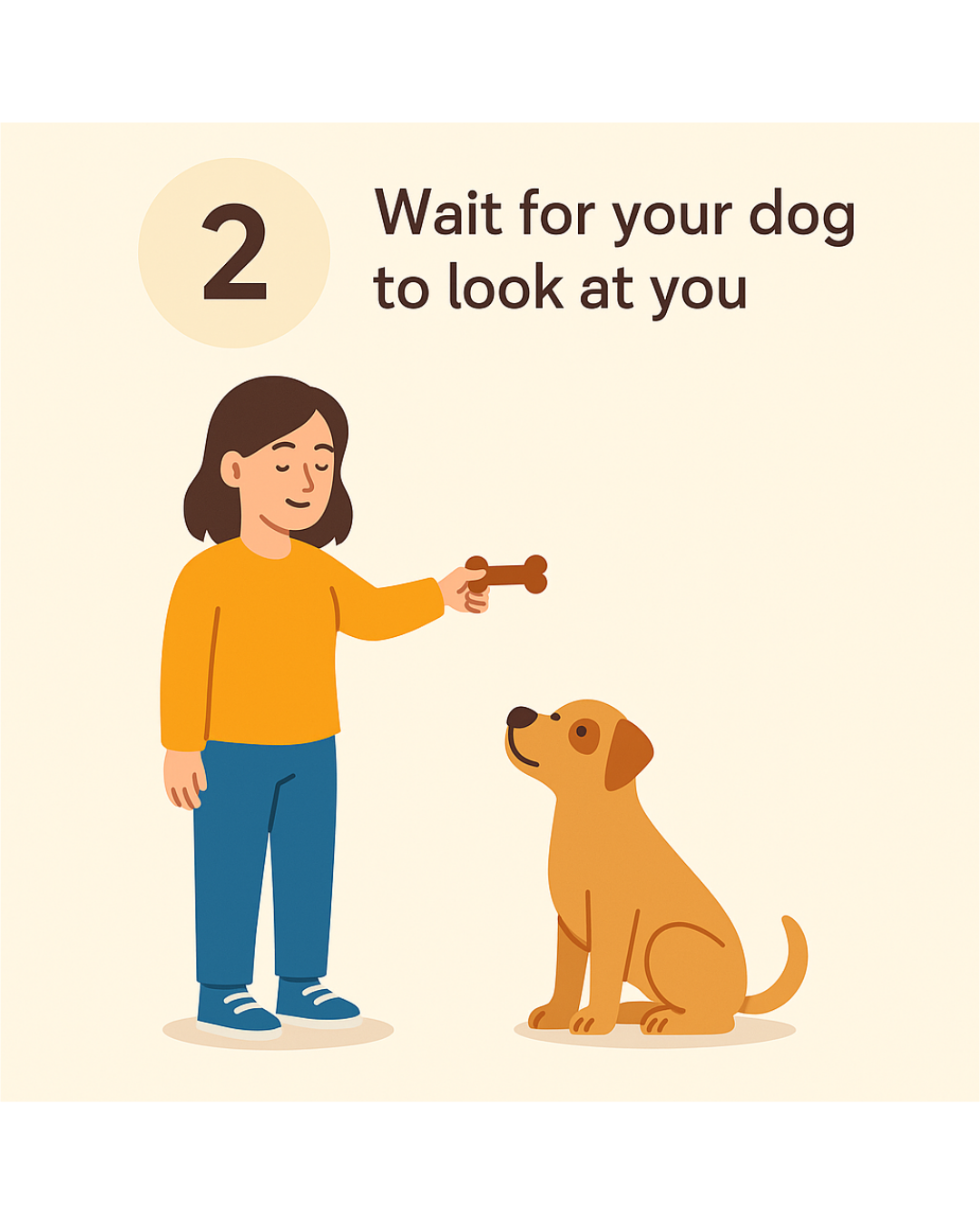
Don’t add the cue before your dog is offering eye contact reliably on their own.
Phase 3 — Increasing Duration
Once the cue is working, you can start building the length of the eye contact before marking.
The goal isn’t a prolonged stare. It’s a soft, willing, consistent check-in. A dog who glances at you and away is not failing — they’re being a dog. What you’re building is a dog who offers that glance on purpose, regularly, because it works.
Don’t forget to use the Train-test-Train method to help with progression
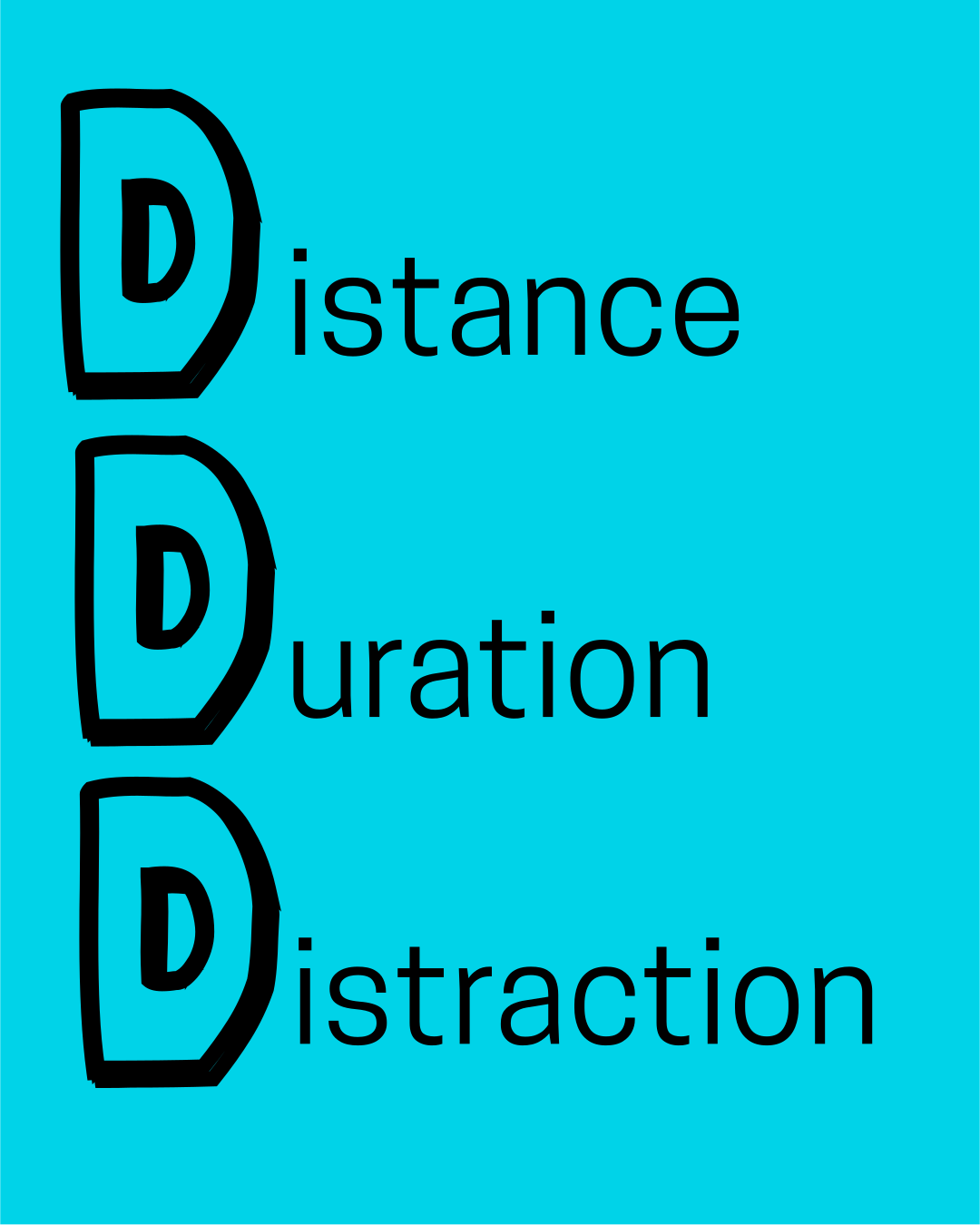
A behavior is only as strong as it is in the hardest situation you’ve practiced it in.
Eyes on Me learned in your kitchen is a start, not a finish. Here’s how to build reliability without overwhelming your dog.
Practice with your dog at different distances from you — a few feet away, across the room, on leash at the end of a six-foot lead. The behavior should hold at any distance you might realistically need it.
Practice holding the eye contact for longer periods before marking. Build gradually — adding one or two seconds per session rather than jumping from two seconds to thirty.
This is the most important D and the hardest one. Start with mild distractions — a toy on the floor nearby, another person in the room — before moving to bigger ones like other dogs or high-traffic environments. Every time you add a new level of distraction, lower your duration expectations back to baseline and build up again.
The golden rule of proofing: never add a new level of difficulty without setting your dog up to succeed at that level. If they’re failing more than they’re succeeding, the distraction level is too high. Back up and build from there.
The treat might be too high value for this early stage — try something less exciting.
You can also try holding the treat slightly behind your back or out of your dog’s direct sightline, so it’s not as overwhelming.
Some dogs need more time in phase 1 before they can disengage from something interesting.
That’s actually good news — the behavior is happening, your timing just needs to catch up.
A clicker helps here because the sound is faster and more precise than a verbal marker for split-second timing.
A soft, relaxed gaze is what you’re going for, not a hard stare. If your dog is staring intensely with a stiff body, they may be in a high arousal state — not the relaxed, willing attention you’re building toward. Lower the distraction level and work on building calm focus before adding any challenge.
Keep Phase 1 sessions to 2–3 minutes. Puppies have short attention spans and tire quickly — three excellent repetitions beats ten mediocre ones. End every session before they disengage, while they’re still succeeding and still interested.
Some dogs who have been corrected for not making eye contact may be reluctant to offer it because eye contact was previously something that got them in trouble (or because direct eye contact was punished in their breed’s history).
If your dog consistently avoids your gaze, work in shorter sessions, use extremely high-value reinforcement, and let them set the pace.
Confidence comes before reliability.
This is a generalization issue, not a compliance issue. The behavior was trained well in low-distraction environments but hasn’t been practiced enough in harder ones.
Go back to a mild distraction level, practice until reliable, then add slightly more. Don’t try to jump from kitchen to dog park — the gap is too big.
Eyes on Me is the foundation for almost every other focus and attention skill in the Barkive. Once it’s solid, these are your natural next steps:
All of these build on the same principle: a dog who’s learned that orienting to you pays off is a dog who’s genuinely easier to live with — not because they’re obedient, but because checking in is something they actually want to do.

Curated by a certified canine enrichment and behavior professional.