Canine Communication
Behavioral Guides • Foundation Reading • All Dogs
Behavioral Guides • Foundation Reading • All Dogs
Your dog is talking to you constantly. The problem is we were never taught how to listen.
Dogs don’t communicate the way we do — through words, through sentences, through the meaning we attach to sounds. They communicate through their bodies: the position of their tail, the softness or hardness of their gaze, the tension in their mouth, the way their weight shifts before they move. Every part of a dog’s body is part of the message.
Learning to read that message doesn’t just help you understand your dog better. It changes how you enrich them, how you set them up for success, and how quickly you can tell when an activity is working versus when it’s too much. This guide is your foundation for all of that.

A note before you dive in: these are generalizations. Body language always needs to be read in context — alongside the full picture of what’s happening in the environment, with that specific dog, in that specific moment. No single signal tells the whole story.
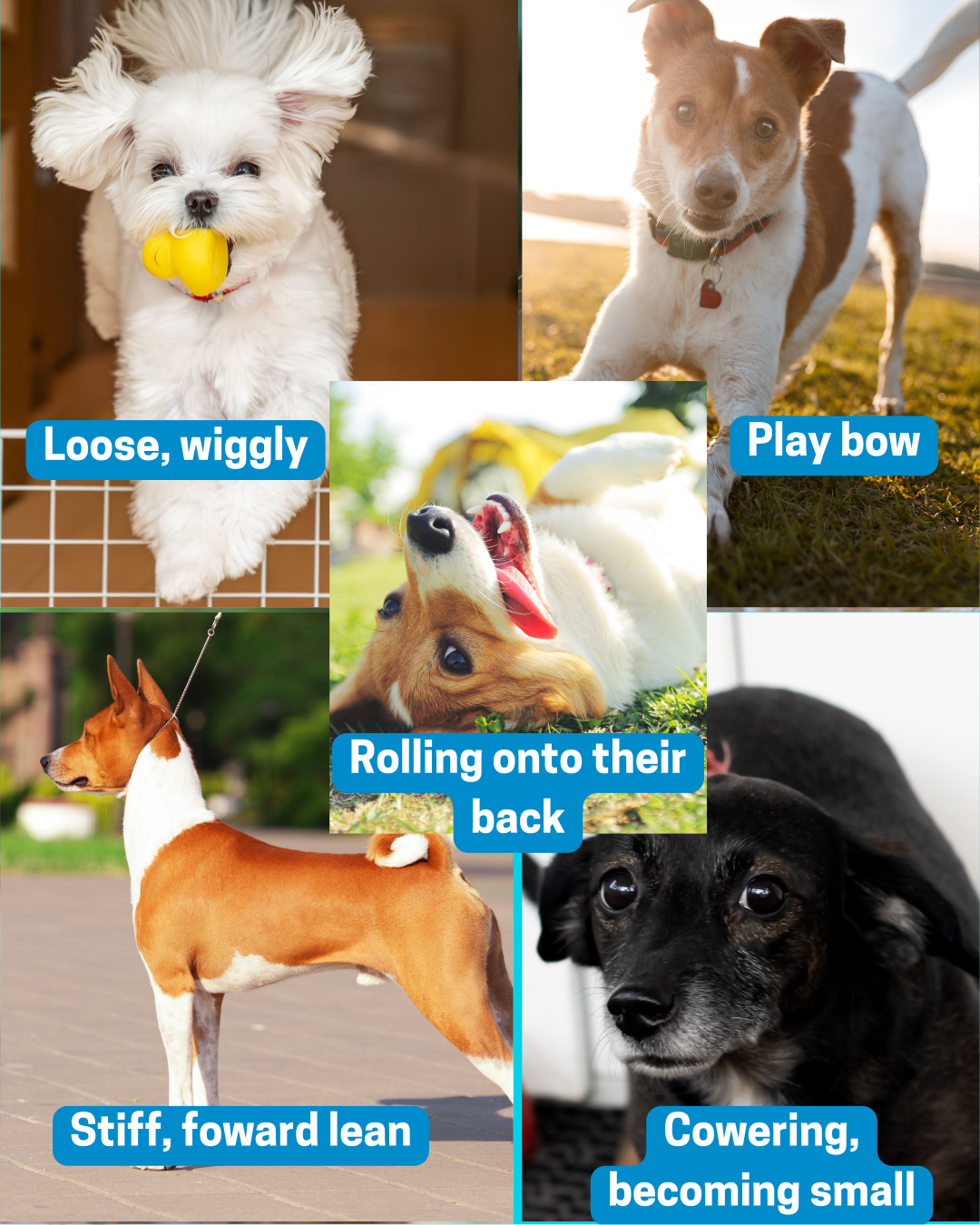
More than 90% of canine communication is nonverbal. Before a dog ever makes a sound, their body has already said something. Learning to read the major body language signals — tail, ears, eyes, mouth, posture — gives you a much clearer picture of how your dog is actually feeling.
The tail is one of the most readable parts of a dog’s body — but position and movement matter more than wagging alone. A wagging tail does not automatically mean a happy dog.

For breeds that naturally carry their tail high (Huskies, Akitas, some terriers), “high” is their neutral. Always read the tail alongside the rest of the body, not in isolation.

Ear position is harder to read in dogs with heavy, floppy ears. Watch for subtle changes in the base of the ear and the skin around it rather than the ear flap itself.

Mouth
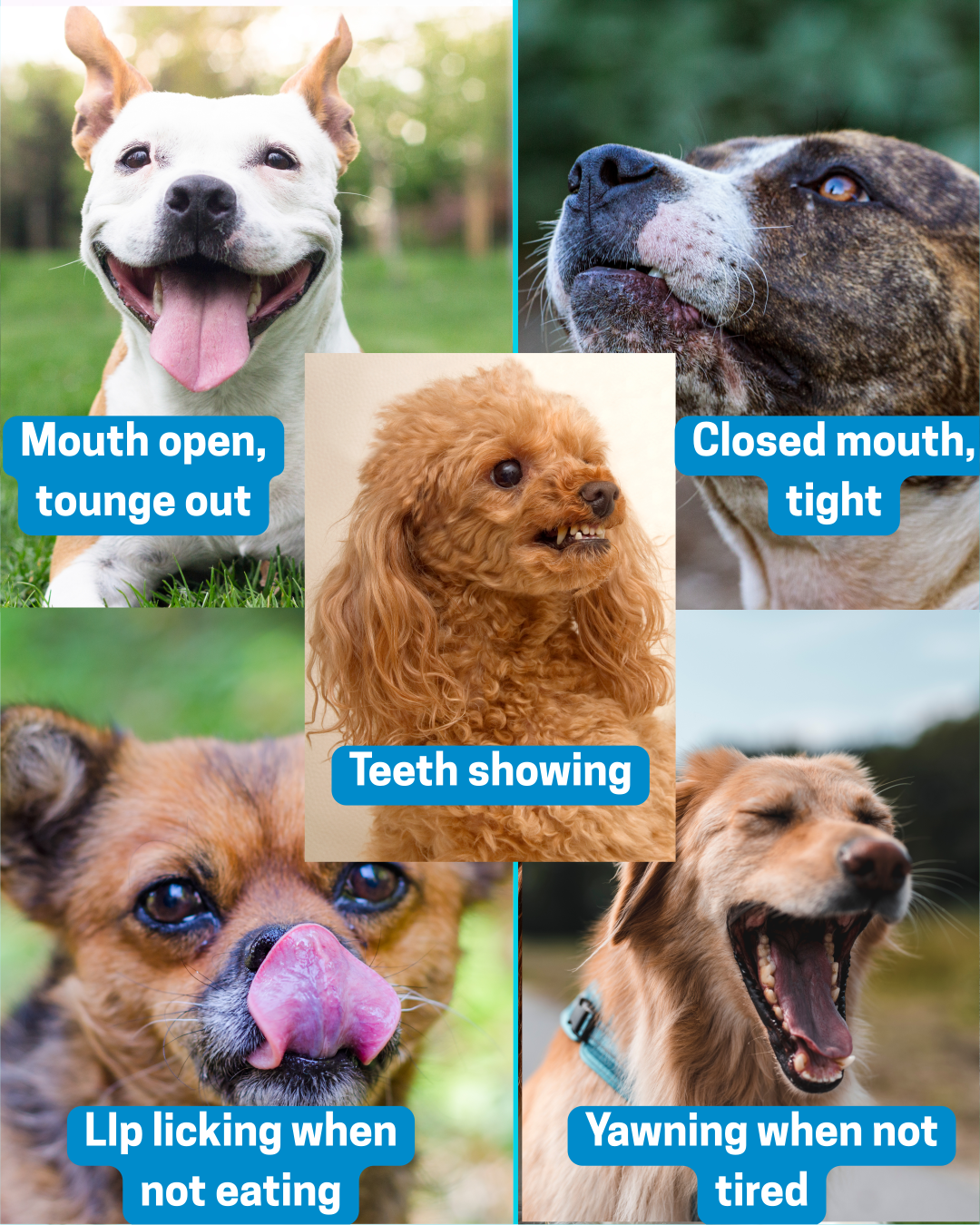
The most important skill in reading body language isn’t memorizing individual signals — it’s learning to read clusters. One signal can mean many things. A collection of signals, read together, tells you what’s actually happening.

We’re taught from an early age that a wagging tail means a friendly dog. That’s true — sometimes. But the tail carries a lot more information than happiness alone, and misreading it is one of the most common ways dog bites happen.
Here’s what to actually look for:
A fast, loose wag involving the whole rear end usually signals genuine excitement or friendliness. A slow, deliberate wag — especially paired with a stiff body — is a very different message. Speed and looseness together tell you about emotional state. Speed alone doesn’t.
A tail held high — whether wagging or still — signals arousal, alertness, or assertiveness. It can escalate to a warning. A tail held low or tucked signals fear or submission. A tail in the dog’s natural neutral position, wagging loosely, is your clearest sign of a relaxed, friendly dog.
Research has found that dogs wag slightly more to the right when they feel positive about something, and slightly more to the left when they feel uncertain or negative. This is subtle and hard to read in real time, but it’s a good reminder that even the direction of a wag carries information.
For more detail on tail communication, read The Myth of the Wagging Tail — downloadable in the resources section below. It’s one of the most practically useful reads on this topic and is written for dog clients, not professionals.
Scroll over each card to learn more. Great information for parents and children from Doggone Safe. Read The Myth of the Wagging Tail for more information by clicking the link: The Myth of a Wagging Tail
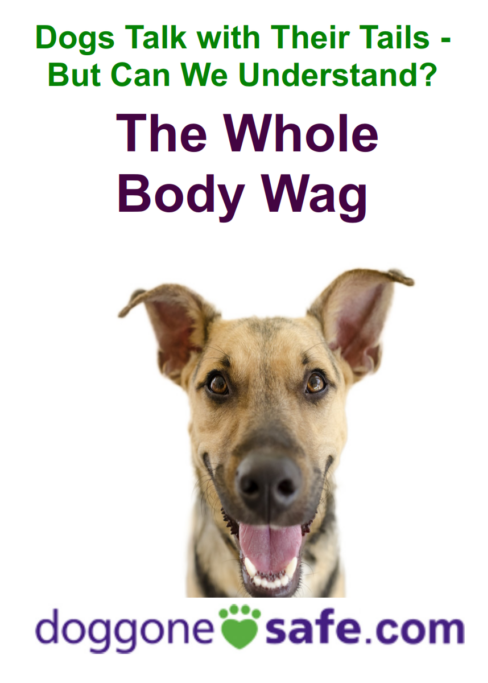
Sometimes a dog is so happy and excited that their whole body wags in a frenzy of activity. Situations like this, a child should not interact with the dog until the dog calms down.

The slow wag, if accompanied by a generally stiff body is also a sign of danger. This dog is making a dexision and he decide that he does not want to meet you.
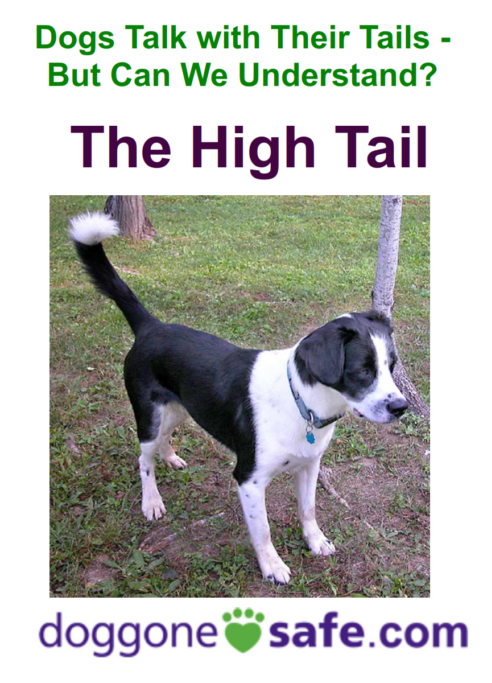
If a dog holds his tail high over his back, whether wagging or stiff, this is a warning to back off. If your dog puts his tail up to you or your children, this is most likely a sign to give the dog some space.
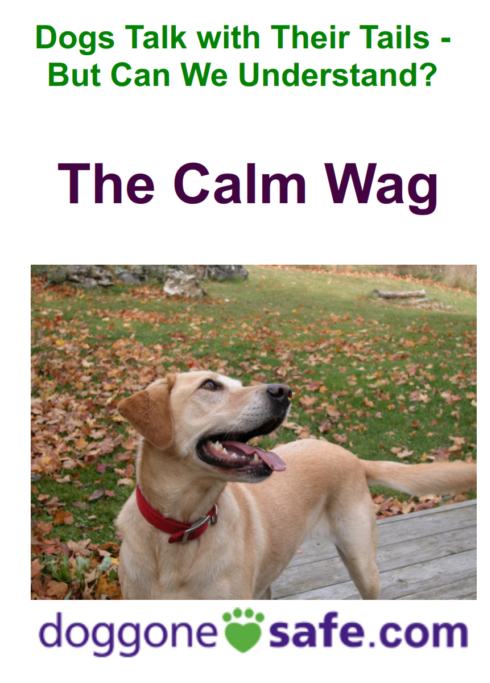
The calm wag is a loosely wagging tail, with the tail held below the level of the dog’s back. For breed that naturally curl their tail over their backs, the will be held high, but their wag will be loose. The calm wag, combined with a smiling panting face is typically welcoming attention.

Curated by a certified canine enrichment and behavior professional.